
Sculptra PLLA Injection Methods-5 Game-Changing Clinical Techniques

Facial volume loss and collagen depletion are the top aging concerns for patients over 40 worldwide. For decades, injectors relied solely on hyaluronic acid (HA) fillers for instant volume correction, yet many clients return within 6–12 months once HA fully metabolizes, complaining about faded rejuvenation results.
This core pain point creates massive demand for regenerative biostimulants like Sculptra (Poly-L-Lactic Acid, PLLA). ISAPS global data shows regenerative injectables have grown over 35% year-on-year, far outpacing HA’s 8% growth rate, as patients crave gradual, long-lasting collagen regeneration rather than temporary physical filling.

Looking for safe, low-nodule Sculptra injection techniques?
This full guide including 8ml reconstitution, temporal up-and-down periosteal injection, ligament zone injection, 5-5-5 massage rule and air bubble suspension trick for aesthetic practitioners.

1: Why Sculptra Is Not Just A Long-Lasting HA Filler – Core Mechanism Differences

Most clinical errors with Sculptra stem from misclassifying PLLA as an extended-wear hyaluronic acid filler. Sculptra is a collagen biostimulator, not a volumetric filler.

2: How PLLA Stimulates Natural Collagen Growth (4-Stage Scientific Process)

Sculptra powder contains 10–40μm biodegradable PLLA crystals suspended in CMC carrier fluid. 

The full collagen regeneration timeline unfolds over 24+ months: 

Days 1–5: CMC carrier fluid absorbs completely; temporary instant swelling fades, leading patients to mistakenly believe treatment failed 

Weeks 2–4: Macrophages engulf PLLA particles and trigger mild controlled inflammatory signaling 

Weeks 12–24: Fibroblasts activate to produce native Type I collagen; visible facial lifting and volume restoration emerge 

Months 20–30: Collagen remodels steadily, maintaining youthful facial structure far beyond HA’s 6–12 month lifespan

A unique under-served patient group ideal for Sculptra: long-distance runners and endurance athletes. These clients naturally have low facial fat stores, and HA cannot restore structural volume effectively, while PLLA’s regenerative mechanism delivers balanced, natural contouring.

3. The Gold-Standard 8mL Sculptra Reconstitution Protocol (Zero Nodule 15-Year Expert Formula)

Reconstitution is the single most critical pre-injection step to prevent subcutaneous nodules, the most common Sculptra complication.

Combine 1 full Sculptra vial with 8mL sterile water for injection + 1mL 1–2% lidocaine for pain control
Vortex the mixture continuously for 60 seconds to create a uniform translucent suspension
Rest the vial for a minimum of 2 hours;  Sunhingmed recommends pre-mixing 24–48 hours before treatment for optimal particle separation
Critical injection hack: The air bubble suspension trick
Every time injection pauses for over 30 seconds, pull a tiny air bubble into the syringe, retract and push the plunger gently to re-suspend settled PLLA crystals. Discard the final 0.1–0.2mL of suspension, where heavy particles accumulate, to avoid visible lumps post-treatment.
Peer-reviewed research from Vleggaar (2008) confirms diluted 8mL reconstitution cuts nodule risk by 60–80% compared to older concentrated mixing protocols.
 
4. Safe Facial Mapping & Vessel Avoidance Marking Strategy:

Vascular embolism and palpable nodules are preventable with precise pre-injection facial marking.
All injection zones are mapped while the patient sits upright to replicate natural facial gravity.

Safe Injection Zones:
Temples (temporal fossa): Primary volumization target for midlife facial sagging
Pre-auricular cheek & zygomatic under-area: Core zone for overall midface restoration
Nasolabial folds, jawline & lower cheek: Deep periosteal depot injection only
 
Absolute High-Risk Injection Zones To Avoid:
Lips, perioral region: Constant muscle movement crushes PLLA crystals into hard nodules
Eyelids & nasal bridge: Thin skin + dense blood vessels raise embolism and visible lump risk
Neck: Continuous muscle contraction triggers uneven particle buildup
 
Key Vessel Avoidance Rules
Temporal superficial artery: Palpate pulse before marking; position injection entry 1cm posterior to arterial pulsation
Facial artery: Runs 1cm lateral to the nostril; shift nasolabial injection points slightly backward to bypass the vessel entirely
Temporal deep artery: Stay clear of temporal suture bony junctions, the artery’s primary anatomical pathway
 
5. Temporal “Up-And-Down” Periosteal Injection (Suggestion from Sunhingmed Safe Technique):
Single entry point at the temporal suture, 1cm from the front of the ear
23G 1-inch needle inserted at a 45° angle, flattened parallel to the bone surface
Inject directly into the supra-periosteal layer, moving the needle vertically up and down to create multiple tiny PLLA depots
Standard dosage: 2mL suspension per temple side; 2.5mL for each lower cheek side
 
Why This Method Outperforms Cannula Temple Injection:
The periosteal plane sits below the superficial temporal artery, eliminating severe embolism risk; even a minor arterial puncture only causes mild bruising
Blunt cannulas leave uneven soft tissue indentations that last days, while single-needle up-and-down placement delivers smooth, uniform volumization
Clinical data from Sherman (2006) confirms periosteal depot injection lowers nodule rates from 5% to 1.5% vs subcutaneous cannula techniques
 
Midface Ligament Partition Injection To Reduce Complications
 
Critical Facial Ligament Boundaries To Observe
Zygomatic ligaments, masseteric ligaments, and mental ligaments anchor facial soft tissue
Never deposit large PLLA volumes directly above ligament bands; particle buildup here creates hard, visible bumps
 
Standard Cheek Injection Protocol
Administer micro-deposits of only 0.1–0.2mL per injection spot between ligament structures
Pre-auricular cheek injections go into the deep dermis (visible needle outline, no full needle color showing) to avoid damaging the superficial parotid gland
For undefined jawlines: Deep 25G 1.5-inch needle injection of 0.5mL Sculptra along the jawbone to stimulate deep collagen remodeling
 
6. Treatment 5-5-5 Massage Rule For Long-Term Results
Poor patient compliance with aftercare is the second leading cause of Sculptra nodules.
 The standardized 5-5-5 massage protocol is backed by decades of aesthetic clinical research:
5 minutes of circular massage per treated area
Repeat massage 5 separate times every day
Continue the full routine for 5 consecutive days post-injection
 
Massage Technique Tips 
Use outward circular motions, moving suspension toward the hairline and ear
Apply gentle, consistent pressure to evenly distribute PLLA particles under the skin
No strict directional rules required; consistent coverage matters more than precise hand movement
Vleggaar’s landmark 2008 meta-analysis proves patients following the 5-5-5 rule have a 2% nodule incidence rate, compared to a 12% rate for patients skipping massage entirely.
 
7. Sculptra Clinical Decision Checklist (Printable For Injectors)
Confirm patient candidacy: Volume loss + skin texture concerns; avoid candidates seeking instant spot correction
Mix Sculptra with 8mL sterile water + lidocaine, vortex and rest minimum 2 hours
Mark all injection zones while patient sits upright, palpate and map all major facial arteries
Use temporal up-and-down periosteal needle technique for temple volumization
Inject micro-deposits only between midface ligaments; avoid perioral, eyelid and neck tissue
Re-suspend suspension with air bubble trick every 30 seconds during injection
Instruct patients to strictly follow the 5-5-5 massage aftercare rule
Schedule treatment courses of 2–3 sessions, spaced 4–6 weeks apart; standard dosage: 1 vial per full facial session.
 
 
Sculptra’s core value lies in regenerative collagen restoration, not temporary physical filling. Injectors who treat PLLA like a long-lasting HA filler will consistently encounter nodules, uneven contouring and dissatisfied patients.
By following the 5 core clinical decisions —8mL low-concentration reconstitution, vascular-safe facial marking, temporal up-and-down periosteal injection, ligament zone micro-deposit placement, and strict 5-5-5 post-treatment massage—practitioners can deliver natural, long-lasting volumization with minimal adverse events.
 
Conclusion
If you’re an aesthetic practitioner looking to upgrade your Sculptra injection safety and patient satisfaction, this training tutorial delivers actionable, research-backed techniques you can implement immediately. 
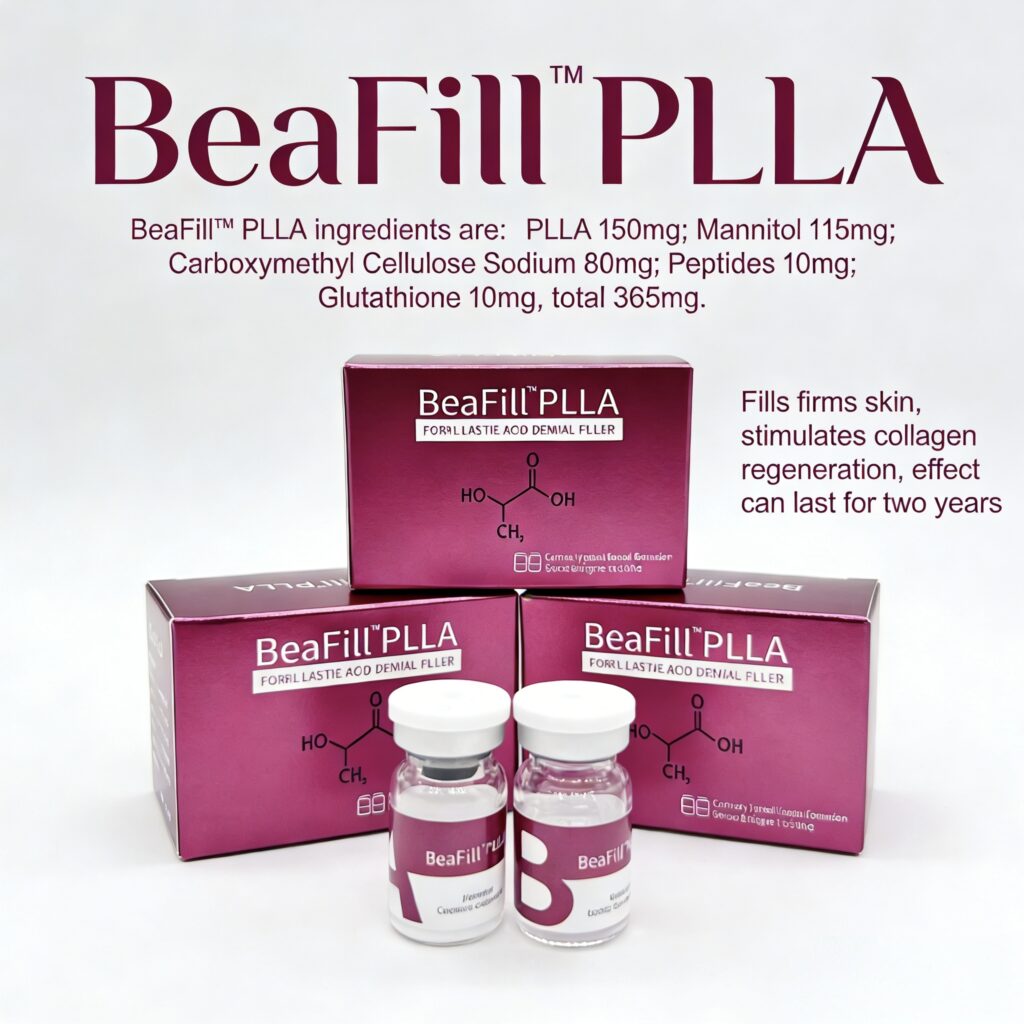
Come to Sunhingmed for more information about our BeaFill PLLA.

CONTACT US

Scroll to Top